


 Customer service
YouTube
Puch Moped Air Filter Tuning: Will It Go Faster?
Choosing the right air filter for your Puch depends on the complete engine setup. An air filter does not automatically make your moped faster. It only helps when your cylinder, carburetor, exhaust, and jetting can actually use the extra airflow.
On a standard Puch engine, the original-style air filter is often the best choice. On a tuned 50cc, 70cc, or race setup, a power filter or race air filter can make sense when the main jet is adjusted correctly. In this guide, we explain the difference between original air filters, power filters, sport filters, and race air filters for Puch Maxi, MV, 15mm Bing, Dellorto PHBG, Polini CP, and tuned cylinder setups.
Watch the Puch Air Filter Tuning Video
This article is based on the PuchShop air filter tuning video, where the difference between original filters, power filters, and race filters is explained in practical tuning terms.
Why the Original Puch Air Filter Is So Large
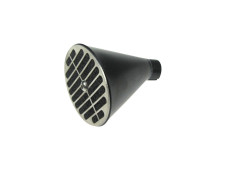
Many original Puch air filter housings look big for such a small engine. You see this on models such as the Puch Maxi and Puch MV, where the filter box is designed as part of the complete street setup. The main goal is not race-level airflow. The original system is built for quiet intake noise, stable running, and reliable everyday use.
On many Puch models, the airbox connects to the frame or uses a small intake tube. This helps reduce intake sound. That matters for a street moped, because a two-stroke engine can get loud quickly when the intake is opened up. Older Puch models may also use earlier style housings, including plastic or Bakelite-style parts depending on the model and year.
Original filters are matched to original engines
A standard cylinder with small ports, an original exhaust, and a 10mm or 12mm carburetor does not need the same air supply as a tuned 70cc engine. That is why the original-style filter often works best on an original Puch: it gives enough air for the setup, keeps the moped quieter, and helps the engine remain easy to tune.
Does a Power Filter Give a Puch More Horsepower?
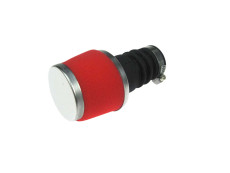
No, not by itself. The name “power filter” sounds like it should create extra horsepower, but the filter alone does not tune the engine. A power filter can let more air into the carburetor, but that only helps when the engine also receives the right amount of fuel and has a cylinder setup that can actually use the extra airflow.
If you install a bigger air filter and keep the same jetting, the engine can run lean. That means the air-fuel mixture contains too much air and not enough fuel. On a two-stroke engine, that is not something to ignore. Correct mixture is important for throttle response, combustion temperature, piston cooling, and engine reliability.
- Original setup: A standard 10mm or 12mm carburetor and original cylinder usually cannot use a large amount of extra air.
- Main difference: On a stock engine, a power filter often gives more intake noise instead of useful extra speed.
- Jetting required: When airflow increases, the main jet normally needs to increase too.
Which Air Filter Should You Use for Your Puch Setup?
The easiest way to choose a Puch air filter is to start with the complete setup. Look at your cylinder, carburetor size, exhaust, and how the moped will be used. A daily street moped needs a different filter than a high-rpm race engine.
Setup-based air filter recommendation
| Puch setup | Recommended air filter | Carburetor / cylinder context | Important tuning note |
|---|---|---|---|
| Original 50cc street setup | Original-style air filter | Original 10mm or 12mm carburetor and standard cylinder | Best for quiet running and stable street use. A power filter usually adds noise, not useful power. |
| Original setup with slightly more airflow needed | Modified original filter or enlarged original filter opening | Useful when fitting a 15mm Bing while keeping a mild setup | Increase jetting carefully and test. Do not assume the biggest jet is best. |
| 50cc fast cylinder / Airsal-type setup | Power filter or high-flow filter | More port timing and airflow demand than an original cylinder | Needs more fuel. Rejet after changing the filter. |
| 70cc street or tuned setup | Power filter or sport air filter | Larger cylinder with higher intake demand | A good match when the carburetor and exhaust are also upgraded. |
| Race setup | Race air filter with larger air chamber | Polini CP, Dellorto PHBG, or similar race carburetor; high-rpm engine | Designed for immediate airflow. Oil the filter and avoid fully soaked conditions. |
Filter type comparison
| Filter type | Best for | Pros | Watch out for |
|---|---|---|---|
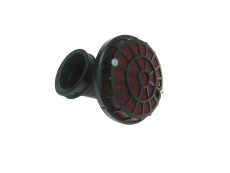
| Original air filter | Standard and mild street setups | Quiet, reliable, original look, good drivability | May restrict heavily tuned engines. |
| Modified original filter | Mild upgrades and 15mm Bing conversions with a basic 70cc. | Keeps original style while allowing more air | Still needs correct jetting. Opening the filter is not a full race intake solution. |
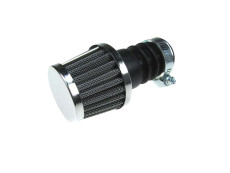
| Power filter / sport filter | 50cc fast, 70cc, and tuned street setups | More airflow, stronger intake sound, good with a larger carburetor | Does not create horsepower by itself. Can make the engine run lean if not rejetted. |
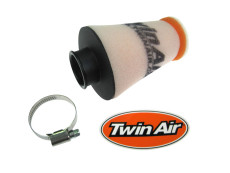
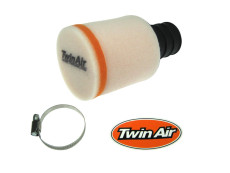
| Race air filter | High-rpm race engines | Immediate air supply, larger air chamber, good for race carburetors | Less street-friendly, more exposed to weather, needs maintenance and oiling. |
Matching Airflow with Fuel on a Two-Stroke Engine
A two-stroke engine needs the right air-fuel mixture. When you increase airflow with a more open air filter, you normally need to increase fuel delivery with a larger main jet. This is why an air filter change should be treated as a tuning change, not just a cosmetic part swap.
The correct mixture helps the engine pull cleanly, stay cooler, and avoid lean running. Too little fuel can create high combustion temperatures and poor throttle response. Too much fuel can make the engine four-stroke, smoke excessively, lose power, or foul the spark plug. The goal is not simply “more fuel” or “more air.” The goal is the correct mixture for your exact setup.
The carburetor size matters too. A 10mm or 12mm original carburetor has a practical airflow limit. A 15mm Bing gives more room for a mild tuned setup. For more serious tuning, carburetors such as a Dellorto PHBG or Polini CP can support a higher airflow demand, but only when the cylinder, intake, exhaust, ignition, and jetting are also matched.
Need main jets or carburetor parts? Browse Puch carburetor jets and Puch carburetors.
Back to topWhen Does a Race Air Filter Make Sense?
A race air filter makes sense on a tuned machine that needs a lot of air immediately. This is especially important on engines that run high rpm and use a race carburetor such as a Polini CP, Dellorto PHBG, or similar setup. At that point, the engine is not just looking for a small increase in airflow. It needs quick air supply when the throttle opens.
Why air chamber volume matters
On a race moped, throttle response out of a corner is important. When you come out of a turn and open the throttle, the engine needs air right away. A proper race air filter with a larger air chamber can provide an air reserve near the carburetor. Flat, small, or restrictive filters do not offer the same volume.
Race filters can also be oiled. This helps the filter catch dirt and work properly in racing conditions. Some sport and race filters can handle light rain, especially when oiled, but a fully soaked filter becomes a problem because it blocks airflow. For everyday wet-weather riding, a protected original-style filter is usually the safer choice.
Final Recommendation: Choose the Filter for the Setup, Not the Name
The word “power filter” can be misleading. The filter does not create power by itself. It only helps when the engine setup needs more airflow and the carburetor is jetted to match. That is why the best air filter depends on the full build.
Still not sure which filter belongs on your Puch? Send PuchShop your setup and we can help you choose the right option. Include your cylinder, carburetor size, exhaust, current main jet, and how you use the moped. You can contact us by email at info@puchshop.de or send us a WhatsApp.
Back to topFAQ: Puch Air Filters
Does a power filter make my Puch faster?
Not on its own. A power filter can allow more air into the carburetor, but the engine only benefits when the cylinder, carburetor, exhaust, and jetting are matched. On a standard setup it often adds intake noise rather than useful power.
Do I need a bigger main jet after installing a power filter?
Usually yes. More airflow normally requires more fuel. Start carefully, test the engine, and adjust the main jet step by step instead of making a large jump without testing.
What air filter should I use on an original Puch Maxi?
For a standard Puch Maxi engine, an original-style air filter is usually the best choice because it is quiet, reliable, and matched to the original carburetor and cylinder.
When should I use a race air filter?
Use a race air filter on a heavily tuned or racing engine with a large carburetor and high rpm demand. The larger air volume helps the engine get air quickly when you open the throttle.
Can I ride in the rain with a sport or race air filter?
Some sport and race filters can handle light rain, especially when they are oiled, but a soaked filter restricts airflow badly. For daily wet-weather riding, an original-style protected filter is usually safer.